

Explore Animal Senses in Farm School Next Week
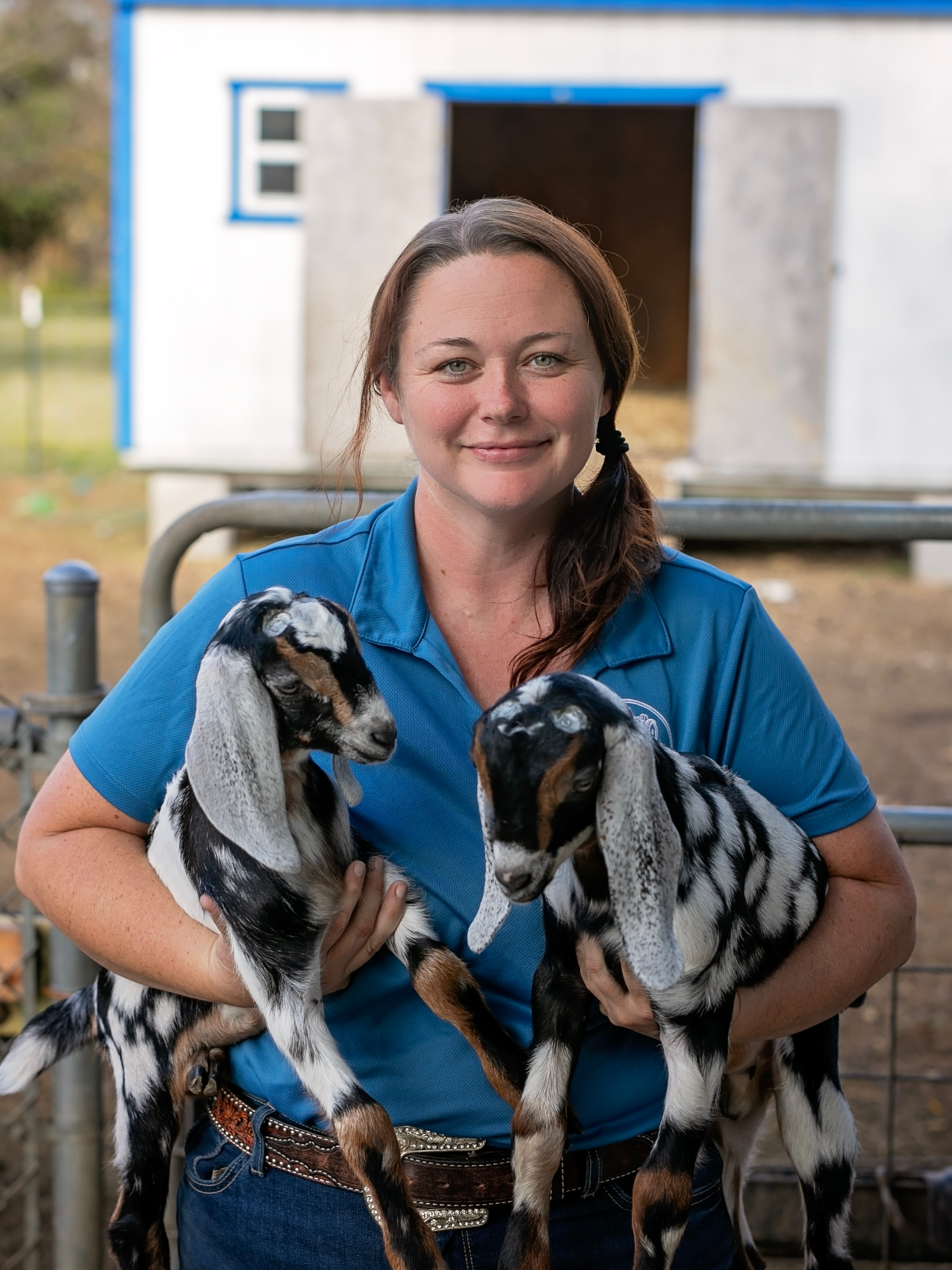
A goat can notice movement across a wide stretch of pasture without turning its head. That one fact opens the door to a bigger question: how do animals experience the world differently than we do?
Next week’s Farm School session, Animal Senses, will give students a hands-on look at that question. The lesson will focus on eyesight, with a special look at how goats use their eyes to stay aware, find food, and respond to life on the farm. Students will compare goat vision with human vision, then take that learning further through a guided sheep eyeball dissection.
This class is designed to be curious, memorable, and respectful. It brings science out of the textbook and into the real world, where students can see how anatomy connects to behavior.

Why animal senses make such a great Farm School topic
Farm School works best when students can connect what they observe to what they already know. Eyes are the perfect place to start.
Everyone knows what it means to see. Students understand brightness, color, distance, and movement from everyday life. But animals do not all see the same way humans do. Their eyes reflect their needs.
A predator, a prey animal, a bird, and a grazing mammal all face different challenges. Some need sharp forward focus. Some need excellent night vision. Some need to detect motion quickly from the side. Goats fall into the prey animal category, which makes their eyes especially interesting.
In Explore Animal Senses in Farm School Next Week, students will not only learn facts. They will be asked to observe, compare, ask questions, and make careful connections between body structure and survival.
What makes goat eyes different from our eyes
One of the first things students notice about goats is their unusual pupils. Instead of round pupils like ours, goats have horizontal, rectangular pupils. That shape helps them take in a wide view of their surroundings.
For a grazing animal, wide vision matters. Goats often eat with their heads lowered. While they are focused on grasses, leaves, or shrubs, they still need to keep track of what is happening nearby. Their eyes help them notice movement across a broad field of view.
Human eyes are built differently. We have forward-facing eyes, which help with depth perception. That helps us judge distance, catch a ball, read, draw, use tools, and focus on details in front of us.
Students will compare these differences in class:
Goat eyes help detect movement across a wide area.
Horizontal pupils support scanning the surroundings.
Side-positioned eyes help prey animals stay alert.
Human eyes help focus clearly on what is in front of us.
Round pupils adjust to light and support detailed focus.
Forward-facing eyes improve depth perception.
These comparisons help students think like scientists. Instead of saying one type of eye is “better,” they learn to ask a stronger question: better for what job?
The sheep eyeball dissection will bring the lesson to life
The hands-on part of the class will be a sheep eyeball dissection. Sheep eyes are often used in life science lessons because they are large enough to study closely and have many of the same major parts found in other mammal eyes.
A dissection gives students the chance to see structures that are hard to understand from pictures alone. Under careful guidance, students may observe parts such as the cornea, lens, retina, and optic nerve. These structures work together to let the eye gather light, focus images, and send signals to the brain.
The goal is not to make the lesson shocking or uncomfortable. The goal is to help students understand that living bodies are organized in remarkable ways. A real eye can show texture, shape, and structure that a diagram cannot fully capture.

Students will practice careful observation
Animal Senses will also help students build the habits of good observers. On a farm, observation is a daily skill. Farmers notice how animals move, eat, rest, respond to sounds, and interact with their surroundings.
In class, students will practice slowing down and looking closely. They may be encouraged to notice details such as:
The shape and placement of a goat’s eyes
How a goat turns its head when watching something
The difference between a diagram and a real specimen
How parts of the eye fit together
How structure connects to behavior
These are the kinds of questions that make science stick. A student might remember that goats have rectangular pupils. But they are even more likely to remember why that matters after seeing goats in the farm setting and studying an actual mammal eye.
What families should know before class
Because this session includes a dissection, students should come prepared for a hands-on science experience. The lesson will be guided, respectful, and age-appropriate, but it does involve a real animal specimen.
Students who enjoy biology, animals, or hands-on learning will likely find this class especially engaging. Students who feel unsure about dissection can still learn a great deal from watching, asking questions, and participating at a comfort level that works for them.
A few helpful reminders:
Wear clothes that are appropriate for farm and science activities.
Come ready to listen closely and follow instructions.
Bring curiosity, especially if the topic feels new.
Expect a calm, respectful approach to the specimen.
Ask questions. Good science starts there.
This class is a chance to practice both curiosity and care. Students will be learning about animals, but they will also be learning how to study living things thoughtfully.
Please sign up for next week’s Farm School session
Next week’s Animal Senses class is a special opportunity to connect farm life, biology, and hands-on discovery. Students will learn how goat eyes work, how they differ from our own, and what eye anatomy can teach us about the way animals survive and respond to the world.
If your student is ready for a memorable Farm School lesson, please sign up for next week’s class. Animal Senses will be a class they can see, touch, question, and remember.


Comments